Long Term Risks of Carnivore Diet
 The Long-Term Risks of the Carnivore Diet: What Happens When You Remove Plants From the Human Diet?
The carnivore diet has become one of the most popular dietary trends in the chronic illness and wellness communities.
People are being told to remove fruits.
Remove vegetables.
Remove beans.
Remove lentils.
Remove whole grains.
Remove nuts.
Remove seeds.
Remove virtually every source of dietary fiber and live primarily on meat, eggs, animal fat, and sometimes dairy.
Some people initially feel better.
And this is exactly where I think people become confused.
Feeling better temporarily after removing dozens or even hundreds of foods does not necessarily mean those foods were damaging your body.
Sometimes you simply performed an extremely aggressive elimination diet.
You removed processed foods.
You removed refined sugar.
You removed alcohol.
You removed food additives.
You removed foods you may have personally been reacting to.
You dramatically changed your carbohydrate intake.
You may have reduced your overall calorie intake without realizing it.
All of those changes can make someone feel better.
But there is an enormous difference between using a restrictive diet temporarily and concluding that human beings should permanently eliminate virtually the entire plant kingdom.
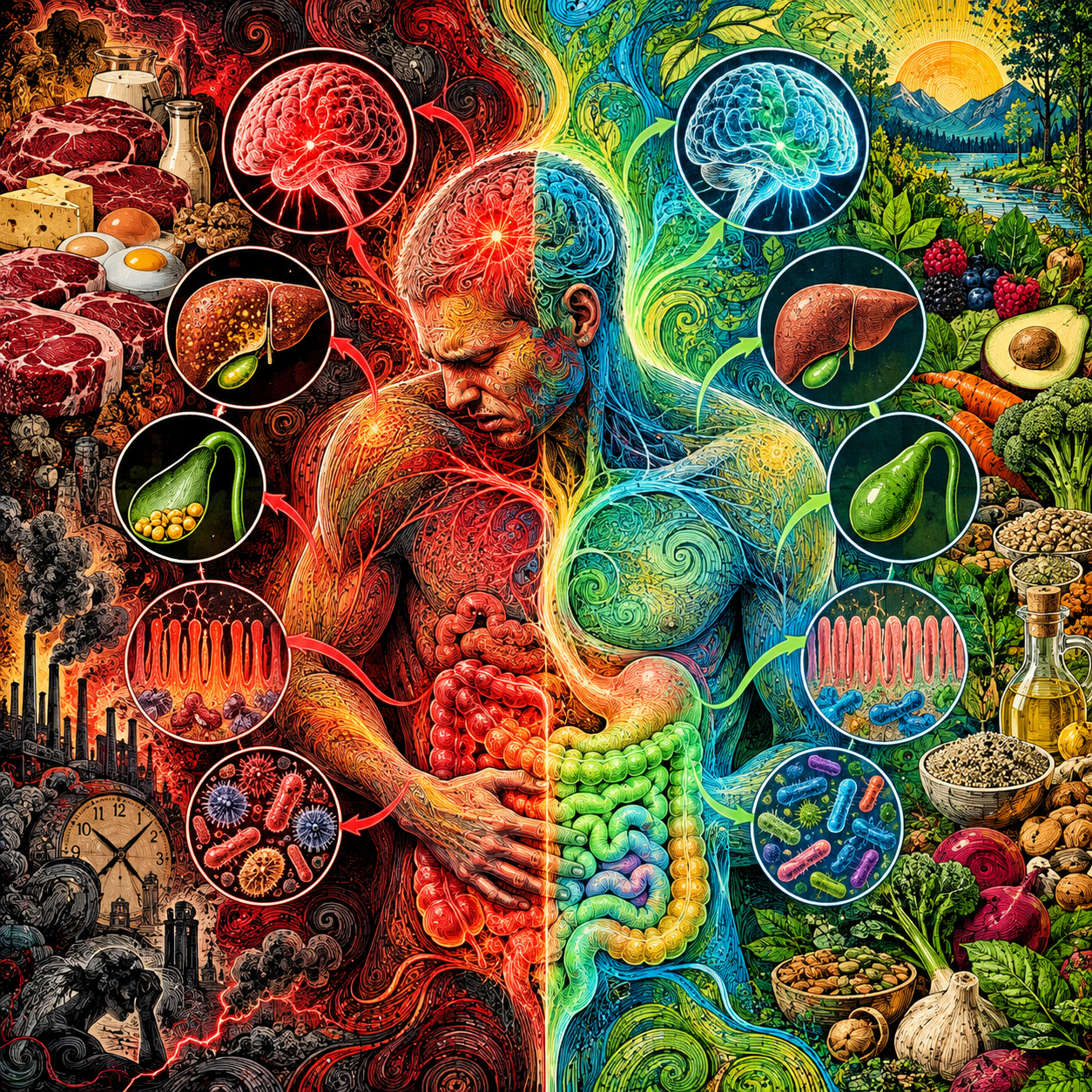
When we start looking at what happens inside the gut, microbiome, immune system, cardiovascular system, liver, gallbladder, and colon, I believe there are serious reasons to question whether a carnivore diet is a wise long-term strategy.
Your Gut Microbiome Needs to Eat Too
One of the biggest problems I have with the carnivore diet is extremely simple:
What are you feeding your gut bacteria?
Your digestive tract contains an enormous microbial ecosystem.
Those organisms don’t simply sit inside you doing nothing.
They interact with your food.
They produce metabolites.
They communicate with intestinal cells.
They influence the intestinal barrier.
And they interact extensively with your immune system.
One of their most important food sources is dietary fiber and other carbohydrates that escape digestion in the small intestine.
Those compounds travel into the colon where bacteria ferment them.
This produces substances called short-chain fatty acids.
The three major SCFAs are:
Acetate.
Propionate.
Butyrate.
These compounds are not meaningless digestive waste products.
They are signaling molecules involved in intestinal health, metabolism, epithelial-barrier function and immune regulation.
Modern research increasingly demonstrates that the gut microbiome is essentially transforming plant carbohydrates into compounds that communicate with the rest of your body.
When you eliminate virtually all fermentable plant material, you dramatically change the fuel available to this ecosystem.
That should not be taken lightly.
Butyrate Is One of the Biggest Reasons I Want Plants in the Diet
Butyrate deserves special attention.
Certain intestinal bacteria produce butyrate when they ferment dietary substrates, particularly different forms of fiber and resistant carbohydrate.
Butyrate interacts with the cells lining the colon and participates in maintaining intestinal epithelial function.
It also interacts with immune cells and inflammatory signaling.
SCFAs more broadly have effects extending beyond the intestine and are involved in communication with the liver, immune system, brain and other organs.
This is why I don’t look at fiber as something you eat simply so you can have a bowel movement.
That dramatically underestimates its importance.
Fiber is microbial food.
And microbial metabolism produces compounds that your body actually uses.
If you remove virtually every meaningful source of fermentable carbohydrate indefinitely, you are changing one of the major metabolic relationships between your diet and microbiome.
A Carnivore Diet Can Dramatically Change the Gut Ecosystem
The gut microbiome adapts rapidly to what you feed it.
Feed it differently and different organisms gain an advantage.
An animal-dominant diet creates a very different intestinal environment from one containing fruits, vegetables, beans, lentils, whole grains, nuts, seeds and resistant starch.
When carbohydrates reaching the colon become scarce and protein and fat dominate, microbial metabolism changes.
Instead of predominantly fermenting carbohydrates, more substrate can become available for protein fermentation.
Protein fermentation can generate compounds including ammonia, phenols, indoles, amines and sulfides.
Not every protein-derived metabolite is inherently harmful, and this area is complicated, but high-protein dietary patterns clearly alter microbial metabolism. Research has also reported reductions in some butyrate- and propionate-producing organisms under high-protein conditions.
This is why the question should never simply be:
“How much protein can I digest?”
I also want to know:
“What microbial ecosystem am I creating by eating this way every single day?”
Fiber Does Much More Than Make You Poop
People sometimes dismiss fiber because technically humans can survive without consuming large amounts of it.
Survival isn’t the standard I use for optimal nutrition.
Dietary fiber influences:
Stool formation.
Intestinal transit.
Microbial fermentation.
Microbiome composition.
SCFA production.
Satiety.
Glucose metabolism.
Cholesterol metabolism.
And interactions between the microbiome and intestinal barrier.
Whole-food sources include vegetables, fruits, beans, lentils, whole grains, nuts and seeds.
Research consistently associates fiber-rich whole-food dietary patterns with gastrointestinal and broader metabolic benefits.
A strict carnivore diet removes essentially all of these foods simultaneously.
That is an enormous nutritional experiment to perform indefinitely.
The Immune System Is Directly Connected to the Gut
This becomes even more important for the people I work with because so many are dealing with chronic inflammatory illness, environmental sensitivity, food reactions or immune dysregulation.
A huge portion of the body’s interaction with the outside world occurs across the intestinal surface.
The immune system therefore needs to distinguish constantly between:
Food.
Friendly organisms.
Potential pathogens.
Microbial metabolites.
And other environmental compounds.
SCFAs participate in this communication.
Butyrate in particular has been studied for effects involving intestinal epithelial cells, phagocytes, B cells, plasma cells, regulatory T cells and effector T cells.
So when someone tells me plants are unnecessary because they can technically obtain protein and many vitamins from animal foods, I think that argument misses an enormous part of nutritional physiology.
Food isn’t merely a collection of vitamins and amino acids.
Food also feeds your microbiome.
And your microbiome communicates with your immune system.
What Happens When Gut Bacteria Run Out of Fiber?
This is another fascinating area.
Certain microbes normally consume dietary carbohydrates.
When fermentable substrates become scarce, the microbial ecosystem has to adapt.
Experimental research has shown that chronic fiber deprivation can push some microbes toward greater utilization of host-derived mucus carbohydrates.
Your intestinal mucus layer is not something I want to unnecessarily compromise.
It forms part of the physical separation between the enormous population of organisms living inside the intestinal lumen and the epithelial surface underneath.
Most of the strongest mechanistic evidence for actual mucus-layer erosion comes from animal models, so we should not pretend we know exactly what happens in every human following carnivore.
But the mechanism raises a very reasonable question:
Why intentionally starve the microbiome of one of its major natural food sources indefinitely?
The Gallbladder Has to Handle a Very Different Diet
Carnivore diets are frequently extremely high in fat.
Fat entering the small intestine stimulates release of cholecystokinin, which causes the gallbladder to contract and deliver bile into the intestine.
That process is completely normal.
Fat itself is not the enemy.
The issue is that a dramatic dietary extreme can substantially change bile production, secretion and intestinal bile-acid metabolism.
The gut microbiome modifies bile acids after they enter the intestine, and dietary patterns strongly influence this interaction.
Controlled dietary research has shown that animal-based diets can increase bile-acid exposure and favor bile-tolerant organisms.
This is another reason I dislike reducing nutrition to statements such as:
“Carbohydrates are bad.”
Or:
“Fat is good.”
Human physiology doesn’t work in slogans.
Your liver, gallbladder, intestines and microbiome are interacting with that diet every single day.
Your Liver Is Involved in Everything You Eat
The liver sits directly downstream from the intestine through the portal circulation.
Compounds absorbed from the gastrointestinal tract travel directly toward the liver.
The liver processes amino acids.
It participates in glucose regulation.
It produces bile.
It processes fats.
It handles cholesterol.
It metabolizes hormones and countless compounds entering the body.
And gut-derived metabolites can influence liver physiology.
SCFAs themselves have effects outside the intestine, including interactions involving hepatic metabolism and immune function.
This does not mean eating meat automatically damages your liver.
It doesn’t.
I eat animal foods and recommend them appropriately.
The problem is dietary extremism.
Replacing an enormous diversity of whole plant foods with predominantly meat and animal fat changes the metabolic material arriving from the intestine.
We do not have good long-term controlled trials demonstrating that this extreme dietary pattern is harmless over decades.
That matters.
Then There Is Cardiovascular Risk
Another concern is what happens to LDL cholesterol in some people eating very-low-carbohydrate, high-saturated-fat diets.
Responses vary tremendously.
Some people experience relatively modest changes.
Others experience very large increases in LDL cholesterol.
The recent carnivore-diet literature specifically identifies elevated LDL and total cholesterol as potential concerns, while emphasizing how poor the long-term evidence remains.
If someone’s LDL skyrockets after beginning carnivore, I would not simply dismiss it because their triglycerides improved or because they lost weight.
Multiple things can be true simultaneously.
Someone can lose weight.
Their blood sugar can improve.
Their triglycerides can decrease.
They can feel mentally clearer.
And another cardiovascular risk marker can move dramatically in the wrong direction.
Nutrition has to be evaluated as a whole.
Red and Processed Meat Are Not the Same Thing as Plants
I also think we have to address the obvious issue.
A carnivore diet frequently makes red meat the centerpiece of nearly every meal.
Some versions also include substantial processed meat.
That is very different from eating moderate quantities of high-quality animal foods as part of a plant-rich diet.
The World Health Organization’s cancer agency has concluded that processed meat causes colorectal cancer, while red meat has been classified as probably carcinogenic to humans based on the evidence available. Higher consumption is also why many dietary guidelines recommend limiting red and processed meat rather than making them the foundation of every meal.
Again, that does not mean:
“Meat is poison.”
That is the same kind of nutritional extremism I am arguing against.
The question is dose.
Frequency.
Balance.
And what foods meat is replacing.
Eating four ounces of meat alongside a plate filled with vegetables, beans and potatoes is nutritionally very different from removing the plants and eating meat as the entire plate.
You Also Lose Thousands of Plant Compounds
Plants provide more than fiber.
They contain an enormous variety of phytochemicals, including polyphenols, flavonoids, carotenoids and other biologically active compounds.
Different colored plants contain different combinations.
Blueberries aren’t nutritionally identical to broccoli.
Broccoli isn’t identical to lentils.
Lentils aren’t identical to oats.
Oats aren’t identical to flaxseed.
Flaxseed isn’t identical to apples.
This is precisely why I emphasize variety.
I don’t want five “superfoods.”
I want dietary diversity.
Different fibers feed different organisms.
Different plants provide different polyphenols.
Different foods provide different vitamins, minerals and phytochemicals.
The 2026 carnivore review specifically identified the loss of fiber, health-promoting phytochemicals and potential shortfalls in nutrients such as vitamin C, vitamin D, calcium, magnesium and iodine as areas of concern depending on how the diet is constructed.
Why People Sometimes Feel Amazing on Carnivore Initially
This deserves a fair explanation.
Some people genuinely report feeling dramatically better.
I don’t automatically dismiss their experience.
But ask what they removed.
Imagine someone previously eating:
Pizza.
Bread.
Alcohol.
Sugar.
Fast food.
Seed-oil-heavy processed food.
Desserts.
Artificial ingredients.
Huge meals.
Foods they personally don’t tolerate.
Then tomorrow they eat steak, eggs, salt and water.
They feel better.
What exactly did that experiment prove?
It proved they feel better eating steak and eggs than their previous diet.
It did NOT prove that blueberries, broccoli, lentils, potatoes, apples, carrots, oats, chia seeds and every other plant food are harmful.
This distinction is incredibly important.
An elimination diet can identify that something in the previous diet was causing problems.
It cannot automatically identify every eliminated food as the problem.
Food Tolerance Can Also Change
Someone with severe gut dysfunction may initially struggle with fiber.
They may become bloated.
They may have gas.
They may experience abdominal discomfort.
Removing fiber can therefore make them feel better quickly.
But symptom reduction and restoration of gut health are not always the same thing.
If your gut microbiome has become poorly equipped to ferment certain carbohydrates, throwing enormous amounts of fiber into the diet overnight may also be a terrible idea.
I prefer gradual restoration.
Start with tolerated whole foods.
Slowly increase variety.
Allow the microbiome to adapt.
Monitor digestion.
Then continue expanding the diet when tolerated.
The ultimate goal should generally be greater resilience and greater dietary diversity—not becoming permanently dependent upon an increasingly restricted list of foods.
My Approach: Plants Should Dominate the Plate
For most people, my preferred long-term approach is approximately:
80% whole plant foods.
20% animal foods or less.
That doesn’t mean 80% of your calories have to come from plants.
I use it as a simple way of thinking about what should dominate the overall diet and plate.
Vegetables.
Fruit.
Potatoes.
Rice and intact whole grains when tolerated.
Beans.
Lentils.
Nuts.
Seeds.
Herbs.
Other minimally processed plant foods.
Then use animal foods strategically rather than making them the entire diet.
Eggs.
Fish.
Seafood.
Poultry.
Fermented or minimally processed dairy when tolerated.
And moderate amounts of quality meat.
You don’t have to become vegan.
You don’t have to become carnivore.
You don’t need another dietary religion.
You need food.
Real food.
Diverse food.
Food your digestive system tolerates.
And enough variety to provide substrates for the enormous ecosystem living inside you.
Dietary Diversity Creates Biological Diversity
This is ultimately why I emphasize a wide variety of whole plant foods.
Every time you eat, you are not only feeding yourself.
You are feeding an ecosystem.
Different organisms specialize in metabolizing different carbohydrates and plant compounds.
Those organisms interact with each other.
One species can produce a metabolite another species uses.
This process of microbial cross-feeding contributes to SCFA production and other metabolic networks inside the colon.
Your microbiome isn’t supposed to be viewed as an enemy that needs to be starved.
It is supposed to function as an ecosystem.
And ecosystems generally thrive on diversity.
Don’t Confuse Restriction With Healing
This may be the most important message.
If removing 100 foods makes you feel better, that information is useful.
But don’t stop asking questions.
Why couldn’t you tolerate those foods?
What happened to your gut?
What happened to your microbiome?
What happened to your immune system?
Can those foods eventually be reintroduced?
Can microbial diversity be rebuilt?
Can fiber tolerance improve?
Can your diet expand instead of becoming smaller and smaller?
To me, healing means becoming more resilient.
Not becoming terrified of an apple.
The carnivore diet may temporarily function as an elimination diet for certain people, and the limited published evidence does include reports of short-term improvements.
But we currently lack the long-term evidence necessary to conclude that eliminating plant foods indefinitely is safe, and the existing literature identifies legitimate concerns involving fiber deficiency, micronutrient adequacy, microbiome changes, lipid levels and cardiovascular risk.
Meanwhile, we have an enormous body of research supporting diets containing diverse sources of dietary fiber and minimally processed plant foods.
You don’t need to eliminate animal foods.
You don’t need to eliminate plant foods.
For most people, I believe the smarter long-term strategy is balance heavily tilted toward plant diversity:
A tremendous variety of vegetables, fruits, legumes, whole-food starches, nuts and seeds, accompanied by smaller amounts of quality animal foods.
Feed yourself.
Feed your microbiome.
Support your gut barrier.
Support SCFA production.
Support immune regulation.
And stop looking for the next extreme diet that promises to solve every chronic illness by eliminating an entire kingdom of food.
Sometimes the healthiest diet isn’t the most complicated or extreme.
It’s simply a wide variety of real, whole foods—with plants making up the overwhelming majority.
Matt Nedin
Certified Holistic Nutritionist
EndSickness, Founder
Phone: (734) 846-8619
WhatsApp: +17348468619
Email: endsickness@gmail.com